
Transportation Reports
View all reports here.
Our Publications
Maximizing Impact: Innovative Ways for City Leaders to Use Remaining ARPA Funding
Maximizing Impact: Innovative Ways for City Leaders to Use Remaining ARPA Funding.
The American Rescue Plan Act, signed into law by President Biden in spring 2021, was designed to provide direct funding to cities, towns, and villages to help them respond to and recover from the impacts of the COVID 19 pandemic. Since that time, cities have responded to this unprecedented direct funding with a slew of innovative programs designed to invest in long term resilience and to support sectors and communities particularly impacted by the pandemic. This article highlights some of the most innovative uses of ARPA funding, including the expansion of affordable housing, investments in digital equity, and workforce training.
Mayors Institute on Pedestrian Safety 2024 Report
Mayors Institute on Pedestrian Safety 2024 Report.
In partnership with AARP Livable Communities and Smart Growth America, the Mayors Innovation Project held its second annual cohort of the Mayors Institute on Pedestrian Safety (MIPS).
Mayors Institute on Pedestrian Safety: 2023 Report
Mayors Institute on Pedestrian Safety: 2023 Report.
In partnership with AARP Livable Communities and Smart Growth America, the Mayors Innovation Project launched the Mayors Institute on Pedestrian Safety in 2023 to help mayors develop their knowledge and skills to champion safer streets in their communities.
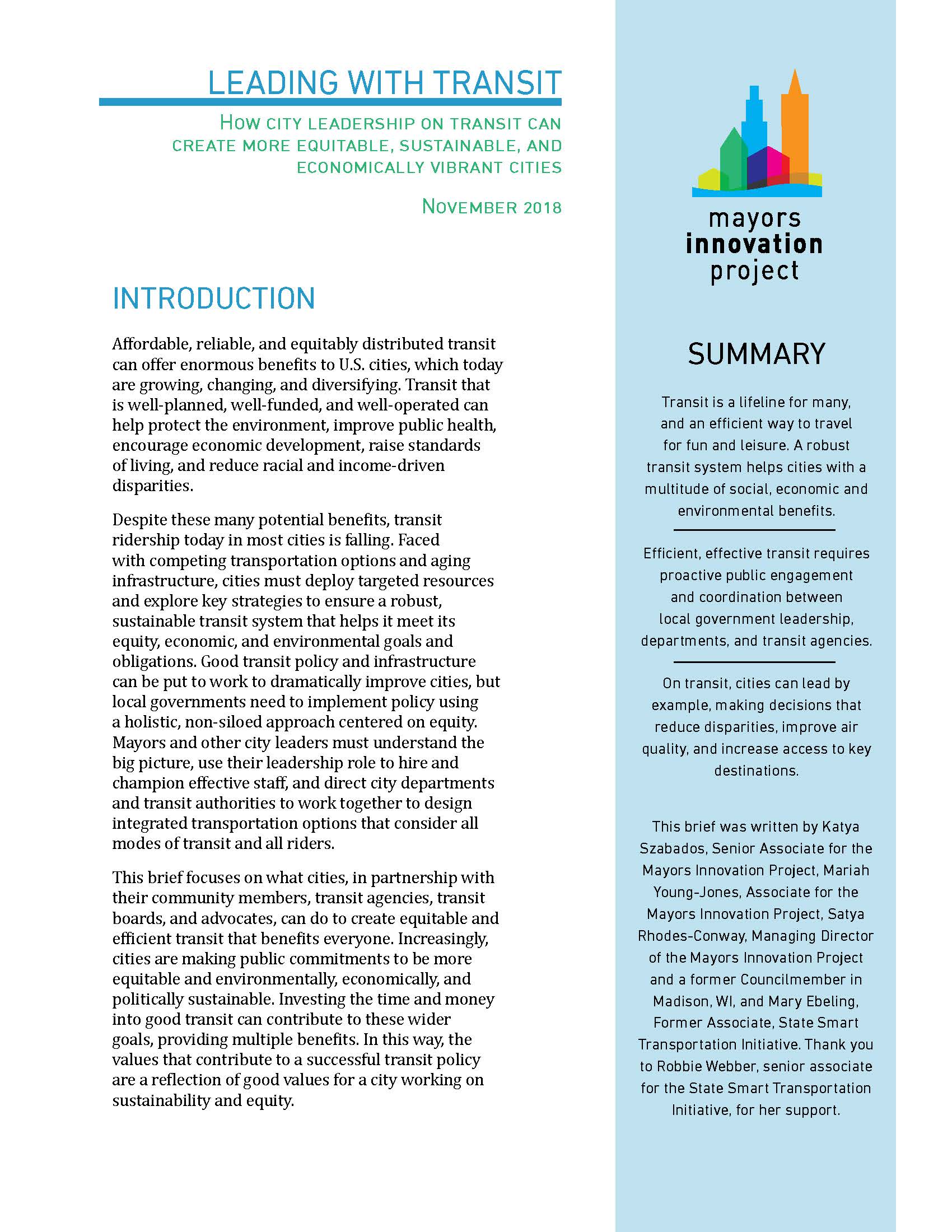
Leading with Transit
Transit service provides a critical link for people in cities. Rather than throw up their hands in the face of falling ridership and revenue streams, cities need to invest in this critical resource. Doing so can provide a wealth of co-benefits that cities care about: the environmental benefits of reducing congestion and car travel; economic benefits of connecting people and jobs; and reducing inequities by providing better access to historically disadvantaged people and neighborhoods. Leading on Transit, describes how cities, in partnership with their transit agencies, public, and other agencies and institutions, can work to enhance transit.
Modernizing Mitigation
Traditional Transportation Demand Management (TDM) strategies are increasingly used by large employers and building owners to encourage the use of alternatives to driving – things like providing bus passes, bike share, and affordable carpooling. But most existing best practices overlook the role of local government decision makers, whose decisions on policy affecting local transportation options, planning and regulation of land use, structure and enforcement of fees, taxes and other financial signals can play a big role in increasing or decreasing vehicle demand.
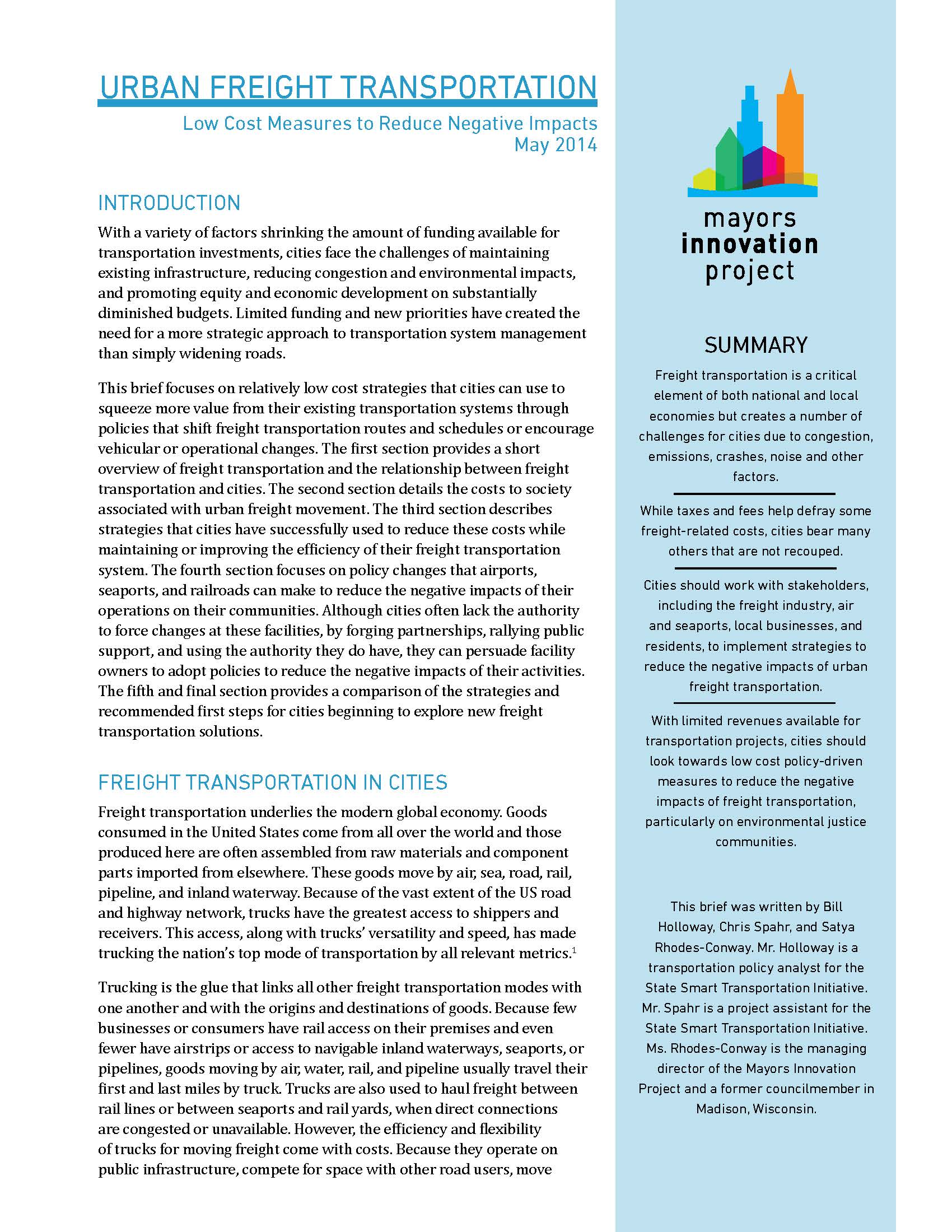
Urban Freight Transportation: Low Cost Measures to Reduce Negative Impacts
Urban Freight Transportation: Low Cost Measures to Reduce Negative Impacts.
Freight transportation is a critical element of both our national and local economies. Yet, it creates a number of challenges for cities due to congestion, emissions, crashes, noise and other factors. This report provides cities with low cost policy-driven measures to reduce the negative impacts of freight transportation. Increasing the efficiency of freight movement and addressing the social costs and environmental justice issues of freight transportation are not mutually exclusive. The strategies identified in this report can help cities meet their transportation challenges in the years ahead while promoting just, healthy, and sustainable freight practices.
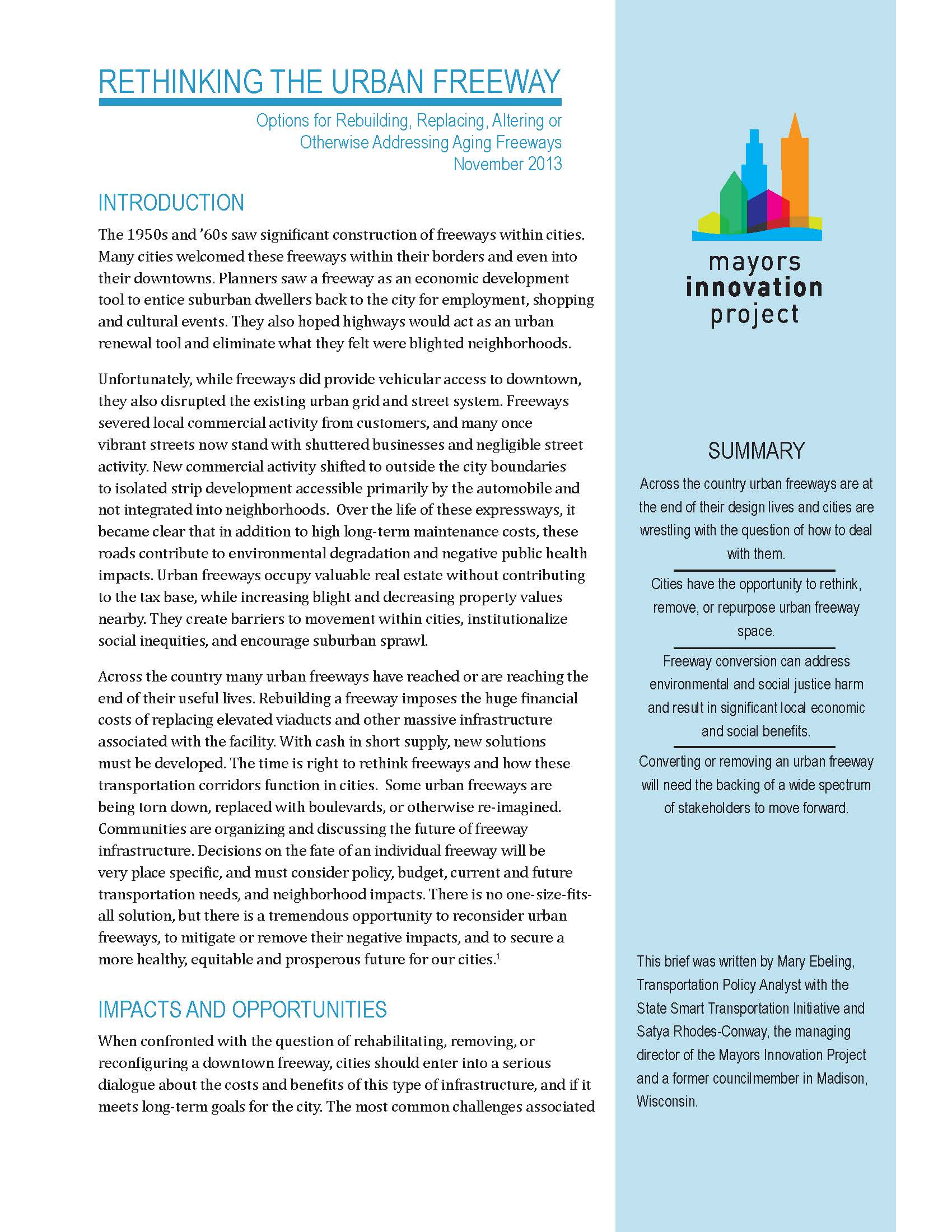
Re-Thinking the Urban Freeway: Options for Rebuilding, Replacing, Altering or Otherwise Addressing Aging Freeways
Across the country, urban freeways are at the end of their design lives, and cities are wrestling with the question of how to deal with them. Cities have the opportunity to rethink, remove, or repurpose urban freeway space, which can address environmental and social justice harm and result in significant local economic and social benefits. This report provides cities with best practices and solutions from across the country, to help cities mitigate negative freeway impacts and secure a healthy and more prosperous future.