
Climate and Divestment Reports
View all reports here.
Our Publications
Data, Financing, and Leadership Solutions for Flood Resilient Infrastructure
Data, Financing, and Leadership Solutions for Flood Resilient Infrastructure.
Climate change continues to pose unprecedented challenges for cities, and the 2024 hurricane season reminded us that flood resilient infrastructure is critical—and increasingly complicated to fund, implement, and manage. This article is a summary of the data, financing, and leadership tools that mayors need to plan for and implement projects to help their cities withstand and recover quickly from floods.
Maximizing Impact: Innovative Ways for City Leaders to Use Remaining ARPA Funding
Maximizing Impact: Innovative Ways for City Leaders to Use Remaining ARPA Funding.
The American Rescue Plan Act, signed into law by President Biden in spring 2021, was designed to provide direct funding to cities, towns, and villages to help them respond to and recover from the impacts of the COVID 19 pandemic. Since that time, cities have responded to this unprecedented direct funding with a slew of innovative programs designed to invest in long term resilience and to support sectors and communities particularly impacted by the pandemic. This article highlights some of the most innovative uses of ARPA funding, including the expansion of affordable housing, investments in digital equity, and workforce training.

Good Ideas for Cities: Combating Extreme Heat
Good Ideas for Cities: Combating Extreme Heat.
The summer of 2024 was one of the hottest on record, and cities across the country are feeling the heat. Hot days are becoming hotter and more frequent. Yet, cities are working to combat heat in innovative ways. From Phoenix’s cool pavement to Cleveland’s Community Forestry Corps Program, this article highlights how cities are taking action to beat the heat and create cooler, safer, more sustainable cities.
Improving Local Recycling Policy and Incentivizing Compliance
Improving Local Recycling Policy and Incentivizing Compliance.
This brief is part of a series of publications MIP has released that was originally researched and compiled as a technical assistance memo to a participating member city. This memo was written in 2020 in response to a specific research question submitted by that member city. To make this publicly available, we’ve removed references to the original request and any location-specific recommendations. For context, the original research question that prompted this memo was: How can the City increase curbside recycling compliance and decrease contamination, discourage illegal dumping, and find solutions for recycling glass?
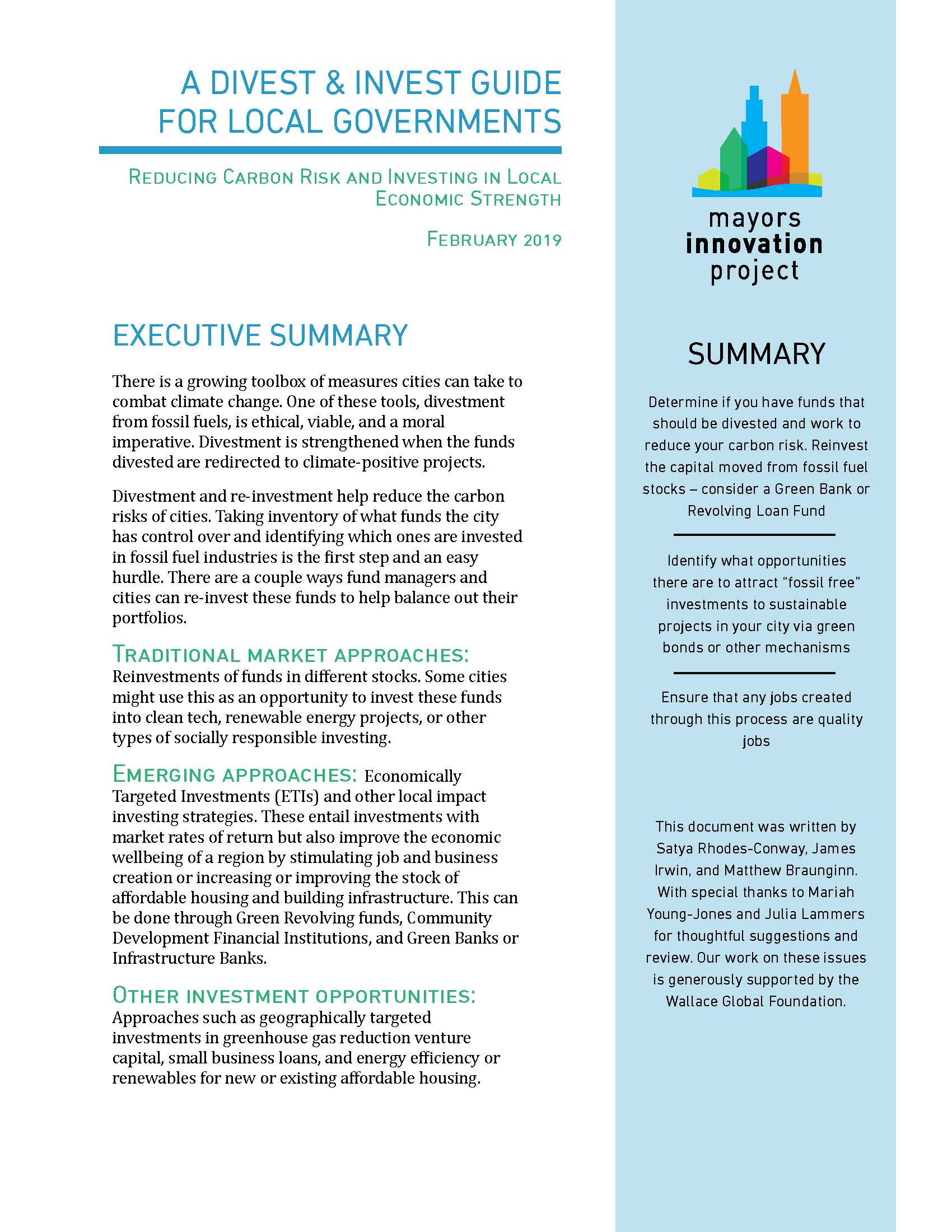
Reducing Carbon Risk & Investing in Local Economic Strength
Reducing Carbon Risk & Investing in Local Economic Strength.
Climate change poses a risk to communities and their investments. There is a growing toolbox of measures cities can take to combat climate change. One of these tools, divestment from fossil fuels, is ethical, viable, and a moral imperative. Successful divest/invest strategies are a matter of political will. Steps a city can take: determine if they have funds that should be divested; reinvest the capital moved from fossil fuel stocks to a Green Bank or Revolving Loan Fund; identify what opportunities there are to attract “fossil free” investments to sustainable projects via green bonds or other mechanisms; ensure that any jobs created through this process are quality jobs.
Local Policies for Greenhouse Gas Reduction
Local Policies for Greenhouse Gas Reduction.
President Donald Trump’s announced withdrawal of the U.S. from the Paris Climate Agreement is a clear shirking of responsibility on behalf of the federal government, but across the country, organizers, activists, mayors, governors and others are only increasing their commitment to the principles of the agreement. Mayors and their cities have many ways to contribute to sound climate policy and carbon reduction. Here we introduce some of the key ways that cities can make a difference in the face of federal inaction.
Divestment from Fossil Fuels: A Guide for City Officials and Activists
Divestment from Fossil Fuels: A Guide for City Officials and Activists.
The logic of divestment is simple: we shouldn’t be funding our retirement by investing in companies whose operations ensure we won’t have a safe planet to retire on. Local governments have the opportunity to be leaders in combating this contradiction by divesting their funds from fossil fuel companies. MIP in partnership with Bill McKibben and 350.org, is working to support the local government fossil fuel divestment movement. Building on the example set by Mayor McGinn of Seattle, we’re removing municipal funds from fossil fuel investments, and working with pension funds to do the same.
Cities at Work: Progressive Local Policies to Rebuild the Middle Class
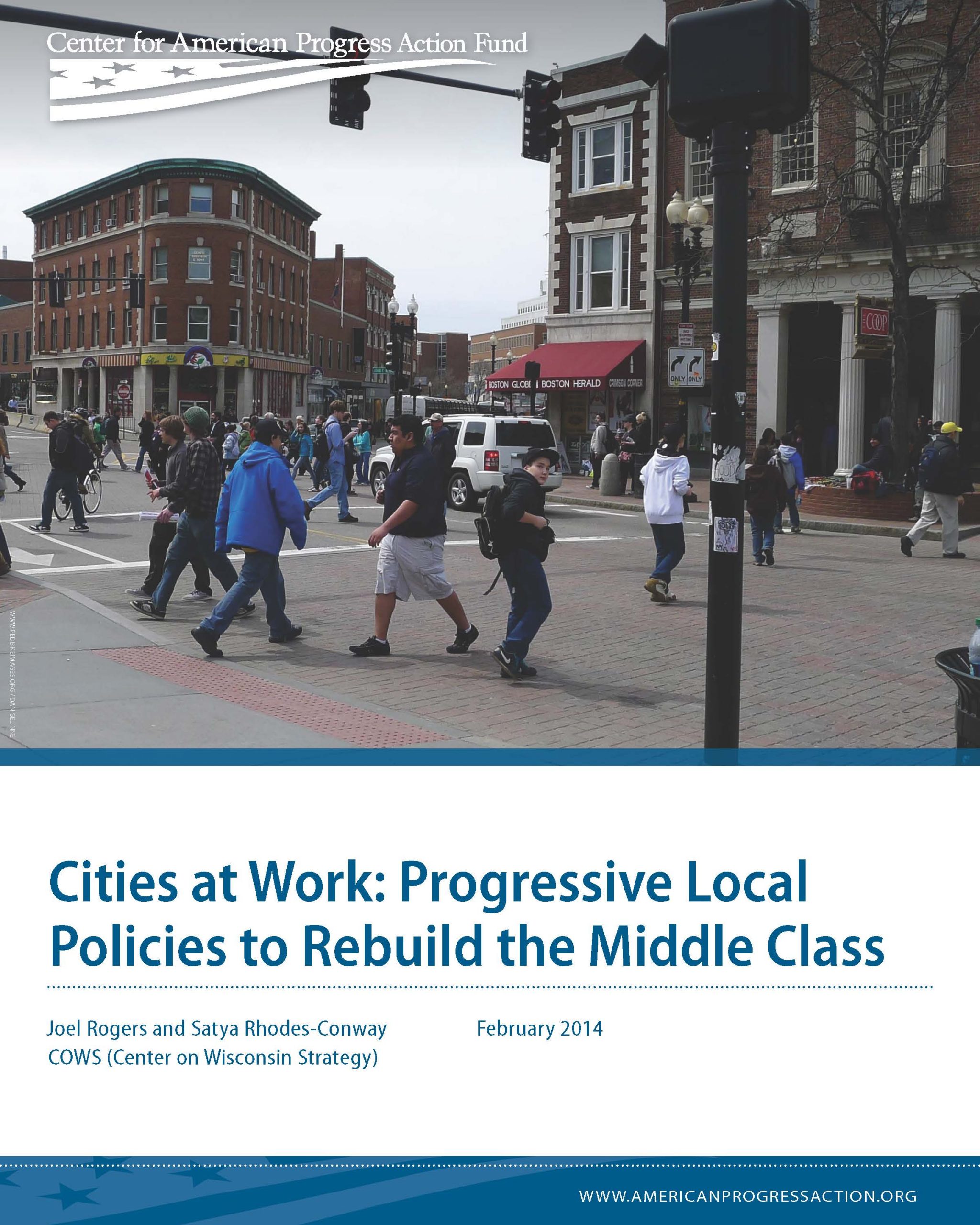
Cities at Work: Progressive Local Policies to Rebuild the Middle Class.
This report is based on the practical experience and struggle of elected officials across the country to move their communities onto the “high road” of shared prosperity, environmental sustainability, and efficient democratic government. Its goal is to arm progressive local elected leaders and advocates with a range of effective policies that, if adopted, would make a significant difference in getting on that high road. They will be able to use better democratic organization to add value, reduce waste, and capture and share locally the great benefits of doing both. Report summary.
Jobs Idea #6: Retrofitting Institutions
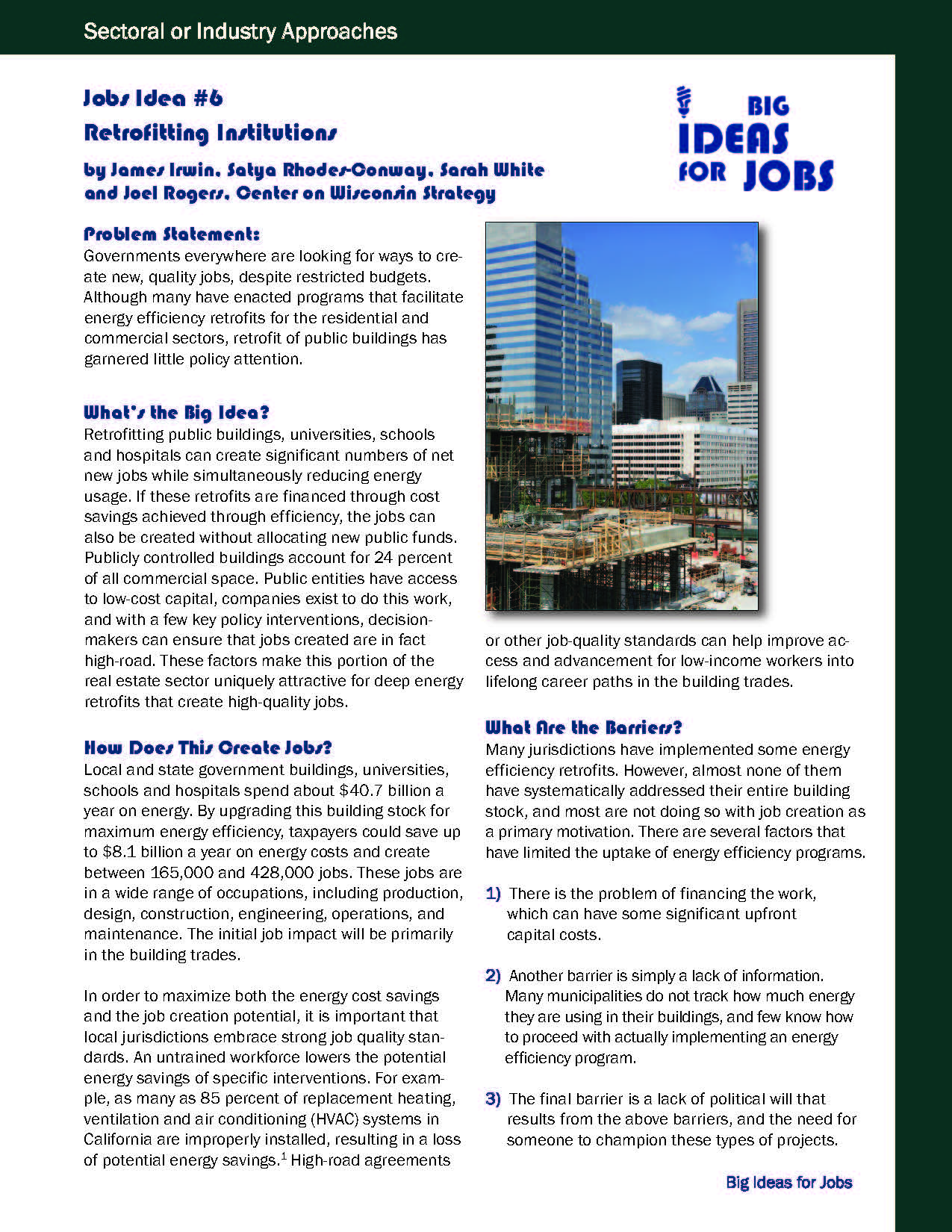
Jobs Idea #6: Retrofitting Institutions.
Governments everywhere are looking for ways to create new, quality jobs, despite restricted budgets. Although many have enacted programs that facilitate energy efficiency retrofits for the residential and commercial sectors, retrofit of public buildings has garnered little policy attention.
New Energy for Cities: Energy-Saving & Job Creation Policies for Local Governments
New Energy for Cities: Energy-Saving & Job Creation Policies for Local Governments.
In this report, we lay out the Apollo Alliance’s Four-Part Plan for how cities can embrace a clean energy future: invest in renewable power; create high-performance buildings; drive toward energy independence; and build high-performance cities.