
Jobs and Skills Reports
View all reports here.
Our Publications
Investing in Police-Community Relations to Advance Public Safety
Investing in Police-Community Relations to Advance Public Safety.
Ensuring public safety is the first task of government. But since our country’s founding, the behavior of police in carrying out this role has been a perennial point of debate, social contest, and often violence. In the wake of the widely publicized police killing of George Floyd in Minneapolis in 2020—and in response to years of frustration with the effectiveness of police, jails, and prisons in enhancing public safety—we look at the many ways cities across the country are rethinking how they allocate police resources to respond to crime.
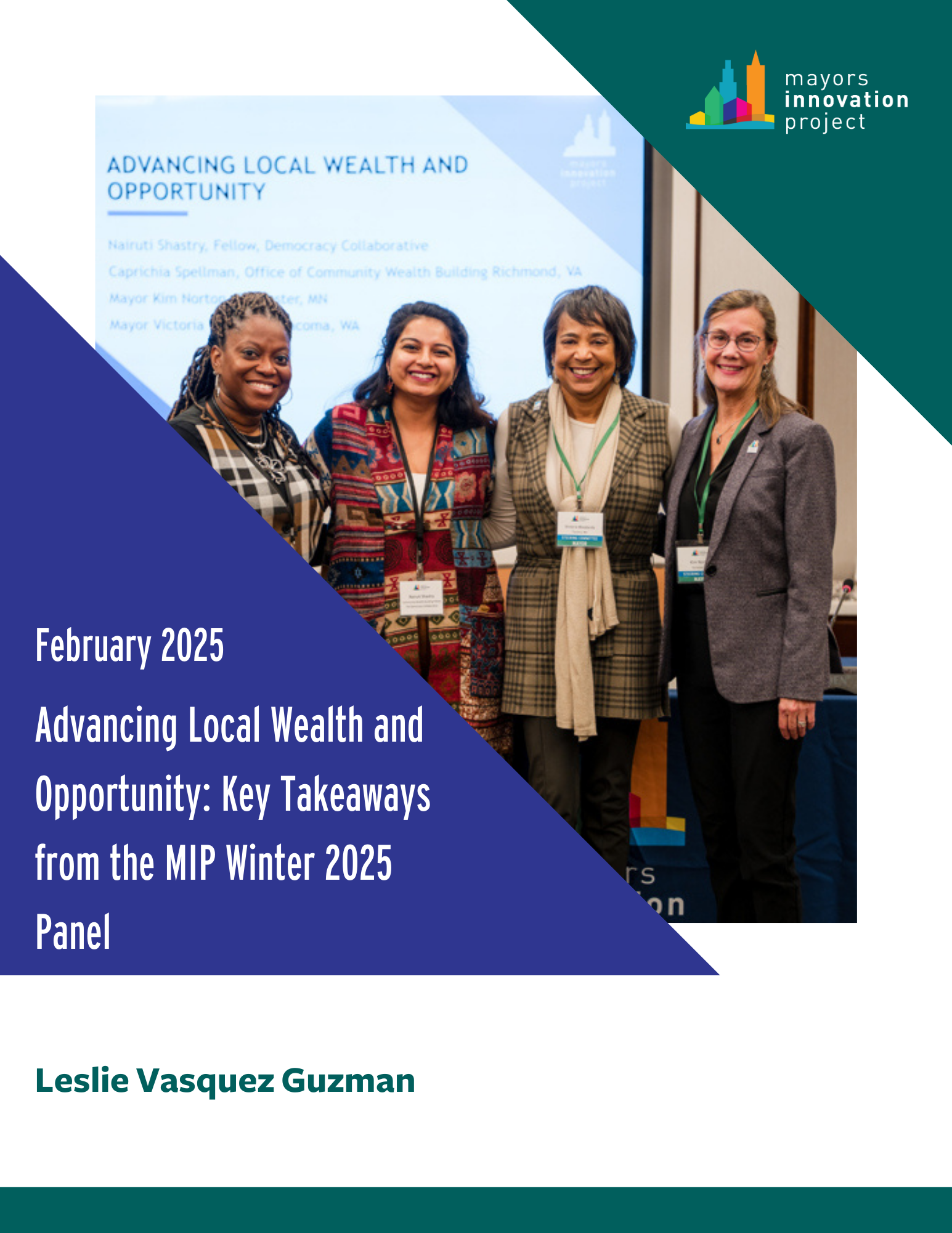
Advancing Local Wealth and Opportunity: Key Takeaways from the MIP W25 Panel
Advancing Local Wealth and Opportunity: Key Takeaways from the MIP W25 Panel.
Wealth inequality in the United States has reached unprecedented levels, leaving millions of Americans struggling to achieve economic stability, much less access economic mobility. This article summarizes the strategies shared by panelists at our Winter 2025 Meeting that mayors can use to advance local wealth and opportunity for residents.
Data, Financing, and Leadership Solutions for Flood Resilient Infrastructure
Data, Financing, and Leadership Solutions for Flood Resilient Infrastructure.
Climate change continues to pose unprecedented challenges for cities, and the 2024 hurricane season reminded us that flood resilient infrastructure is critical—and increasingly complicated to fund, implement, and manage. This article is a summary of the data, financing, and leadership tools that mayors need to plan for and implement projects to help their cities withstand and recover quickly from floods.
Good Ideas for Cities: Expanding Broadband Infrastructure and Internet Access
Good Ideas for Cities: Expanding Broadband Infrastructure and Internet Access.
High-speed internet is a necessity in everyday life for all Americans, yet many across the country lack access to affordable, reliable internet service. Less than fifty percent of Americans have access to fiber-optic broadband, the fastest and most reliable form of connection. This article shares the innovative measures cities have used to bring broadband to their communities.
Good Ideas for Cities: Wage Theft
Good Ideas for Cities: Wage Theft.
Across the country, workers in many industries face wage theft in one form or another. When looking towards accountability, agencies at all levels are often impeded by state-level preemptive laws that prevent local governments from enacting ordinances that would guarantee fair labor practices and access to secure wages. Though many cities face this barrier, there are still a number of effective strategies that local leaders can implement to combat wage theft.
Good Ideas for Cities: Welcoming and Protecting Immigrants
Good Ideas for Cities: Welcoming and Protecting Immigrants.
In celebration of National Welcoming Week, a time to celebrate the diversity of communities and commit to making cities safe, welcoming, and inclusive places where everyone has the opportunity to thrive, this article provides best practices for local governments to support and protect immigrant communities.
Good Ideas for Cities: Creative Tactics Cities are Using to Address the Child Care Shortage
Good Ideas for Cities: Creative Tactics Cities Are Using to Address the Child Care Shortage.
Child care in America has long had issues as costs are steep for providers and parents. In most US states, child care costs exceed the cost of college tuition. This article shares how cities and local governments are implementing innovative ways to make child care more affordable and accessible.
Maximizing Impact: Innovative Ways for City Leaders to Use Remaining ARPA Funding
Maximizing Impact: Innovative Ways for City Leaders to Use Remaining ARPA Funding.
The American Rescue Plan Act, signed into law by President Biden in spring 2021, was designed to provide direct funding to cities, towns, and villages to help them respond to and recover from the impacts of the COVID 19 pandemic. Since that time, cities have responded to this unprecedented direct funding with a slew of innovative programs designed to invest in long term resilience and to support sectors and communities particularly impacted by the pandemic. This article highlights some of the most innovative uses of ARPA funding, including the expansion of affordable housing, investments in digital equity, and workforce training.
Best Practices for Pop-up Shops
Best Practices for Pop-up Shops.
This brief is part of a series of publications MIP has released that was originally researched and compiled as a technical assistance memo to a participating member city. This memo was written in 2023 in response to a specific research question submitted by that member city. To make this publicly available, we’ve removed references to the original request and any location-specific recommendations. For context, the original research question that prompted this memo was: The City is interested in pop-up shop programs across the country; we are most interested in any that are focused on filling vacant storefronts and transitioning pop-ups to longer term leases.
Best Practices for Targeted Hiring in Preempted Cities
Best Practices for Targeted Hiring in Preempted Cities.
This brief is part of a series of publications MIP has released that was originally researched and compiled as a technical assistance memo to a participating member city. This memo was written in 2022 in response to a specific research question submitted by that member city. To make this publicly available, we’ve removed references to the original request and any location-specific recommendations. For context, the original research question that prompted this memo was: The City is interested in ways to prioritize local, historically marginalized individuals and businesses in hiring and contracting. The City seeks examples of municipalities that have implemented either local residency requirements for city-funded construction projects or first source hiring programs. In each case, the City is interested in best practices that they have implemented, legal implications of such programs, and the results, outcomes, and impacts of the programs.
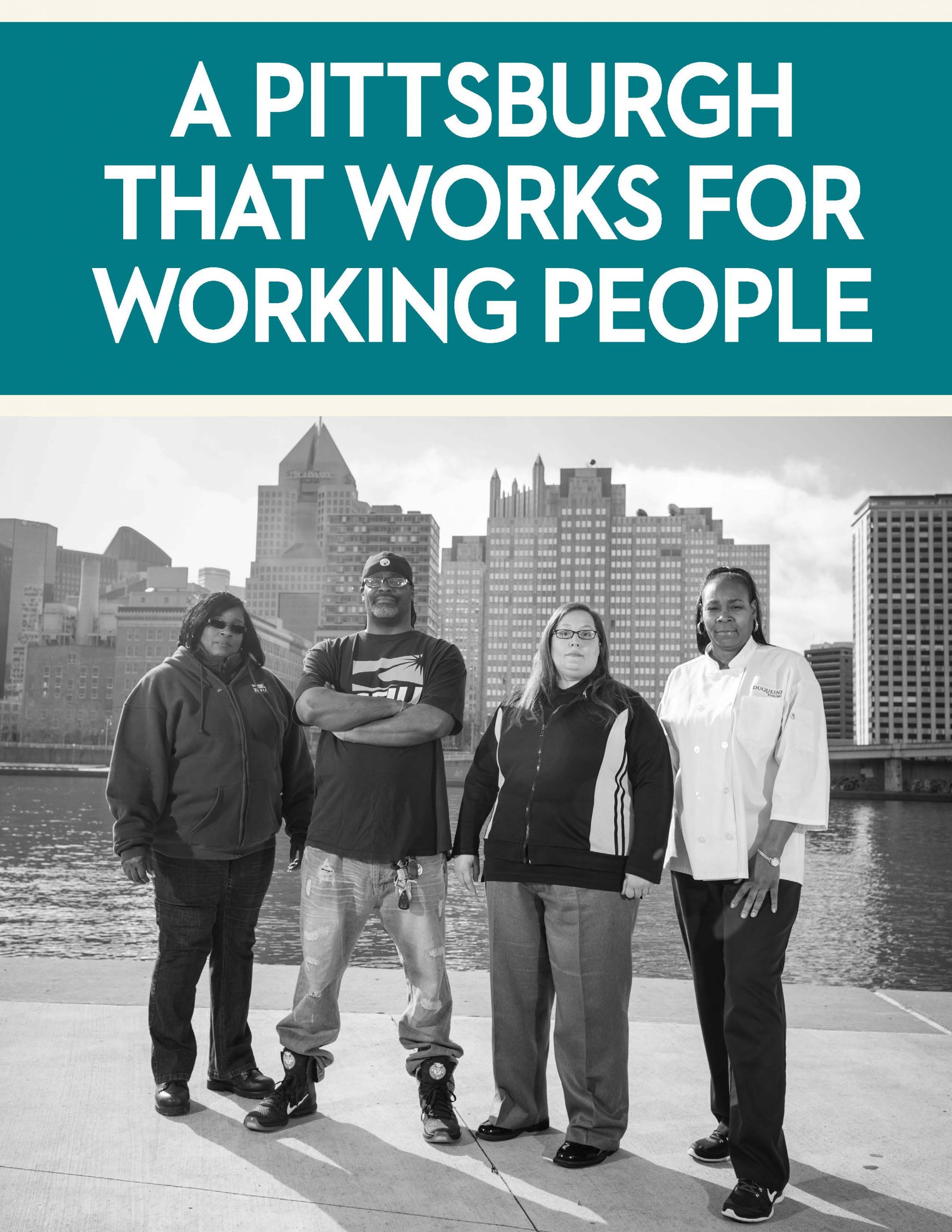
A Pittsburgh that Works for Working People
A Pittsburgh That Works for Working People.
The vision presented in this report is one in which Pittsburgh is known as the city that rebuilt its economy into one of broadly shared prosperity and strong labor standards; with a housing market that meets the needs of long-term residents while also welcoming newcomers; that offers equitable, accessible and safe transportation choices that connect all residents to employment and other critical destinations; and that prioritizes strong community-police relations with historically marginalized communities of color and new immigrants to ensure Pittsburgh is a most livable city for all residents.
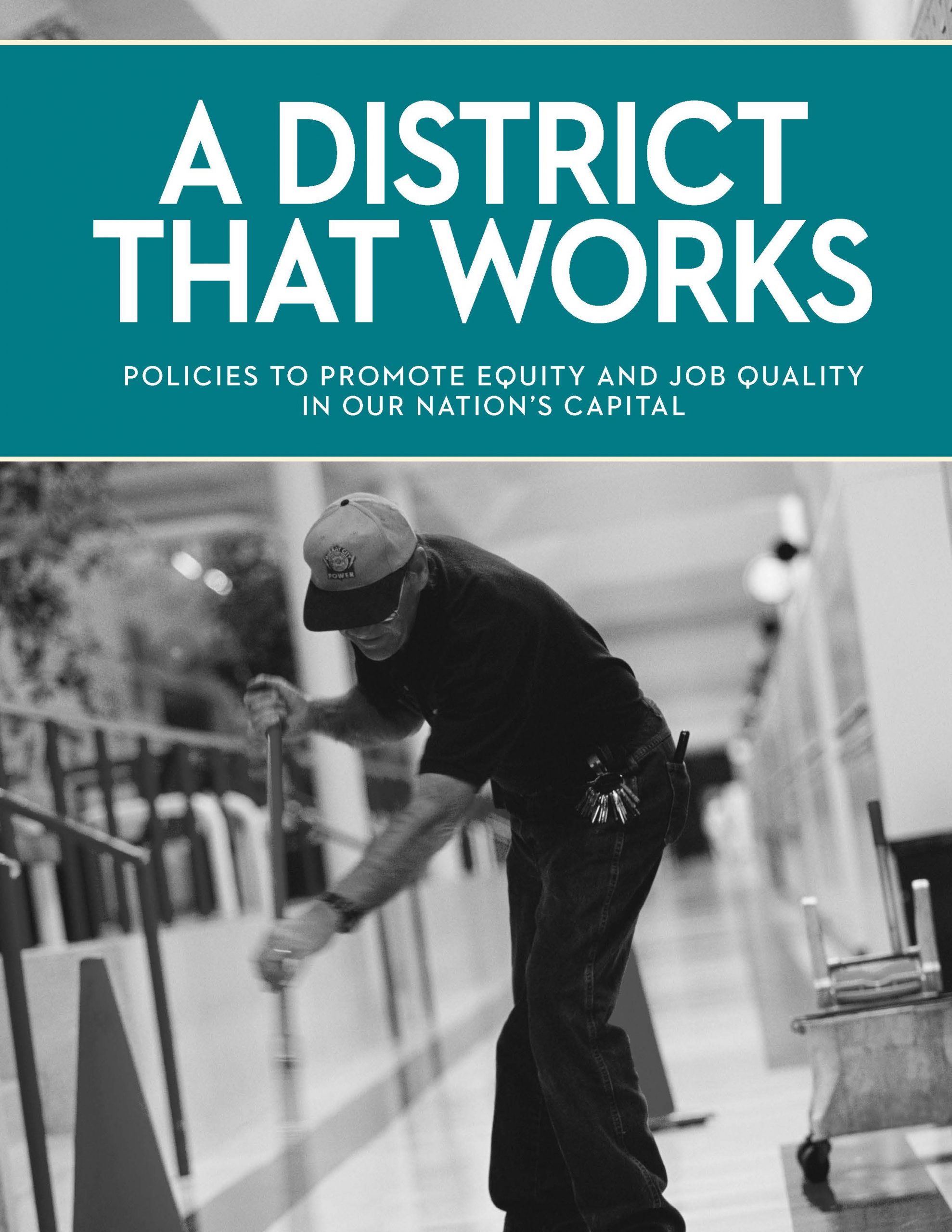
A District That Works: Policies to Promote Equity and Job Quality in our Nation’s Capital
A District That Works: Policies to Promote Equity and Job Quality in Our Nation’S Capital.
The District of Columbia is going through a period of great transformation. While it has successfully strengthened its fiscal health and its economy and population have grown, its prosperity has not been evenly distributed. However, it is not too late for the District to adopt measures that strengthen low income communities and communities of color and push back against the trend of growing inequality. The new administration has a fresh opportunity to tackle these challenges. It will be essential that key leaders in the administration are driven by a strong vision for how to make the District work for all of its residents.
A Boston That Works
Nearly one in four Boston families lives in poverty and incomes in the Greater Boston area are more unequally distributed than in the vast majority of other metro areas around the country. The good news is that the City has a number of important tools that can be engaged to address these problems. However, in order to maximize its effectiveness, the City will have to re-focus and re-organize its approach to economic development. Critically, the City must make combatting poverty and inequality a core priority in all of its programs. Moreover, the City should adopt a broader and more proactive vision of economic development and reorganize programs and structures accordingly. This report, co-written with SEIU 32BJ, identifies five key ways in which the City can re-focus and re-organize its programs and provides a number of specific recommendations of steps the City should take.
Cities at Work: Progressive Local Policies to Rebuild the Middle Class
Cities at Work: Progressive Local Policies to Rebuild the Middle Class.
This report is based on the practical experience and struggle of elected officials across the country to move their communities onto the “high road” of shared prosperity, environmental sustainability, and efficient democratic government. Its goal is to arm progressive local elected leaders and advocates with a range of effective policies that, if adopted, would make a significant difference in getting on that high road. They will be able to use better democratic organization to add value, reduce waste, and capture and share locally the great benefits of doing both. Report summary.
Local Living Wage Ordinances: Experience, Evidence and Best Practices
Local Living Wage Ordinances: Experience, Evidence and Best Practices.
Living wage ordinances raise job standards for workers at firms that do business with a city or county or that benefit from taxpayer assistance. At least 140 communities in the U.S. have passed such laws over the past two decades, and there is now a significant body of research on their effect. The evidence shows that living wage ordinances raise wages for low-income workers, often by a significant amount, with few if any measurable negative effects on either employment or taxes. Cities should consider the track record of living wage laws in other communities in order to implement the best living wage law possible. Written and produced by our partner projects, COWS and ALICE.
Raise the Floor Milwaukee
This report highlights how raising the low-wage floor improves quality of life for the 100,000 workers in poverty-wage jobs in the city, and for a roughly equal number of poverty-wage workers in the suburban counties around city. Long term decline was made more brutal by the Great Recession, leaving workers at the mercy of a dramatic shift from manufacturing into services, declining unionization, and falling job quality. Evidence of the economic crisis abounds, yet Milwaukee’s problems — including racial disparity and residential segregation, child poverty, crime and incarceration, catastrophic drop-out rates, especially for African Americans and Hispanics — are not inevitable.
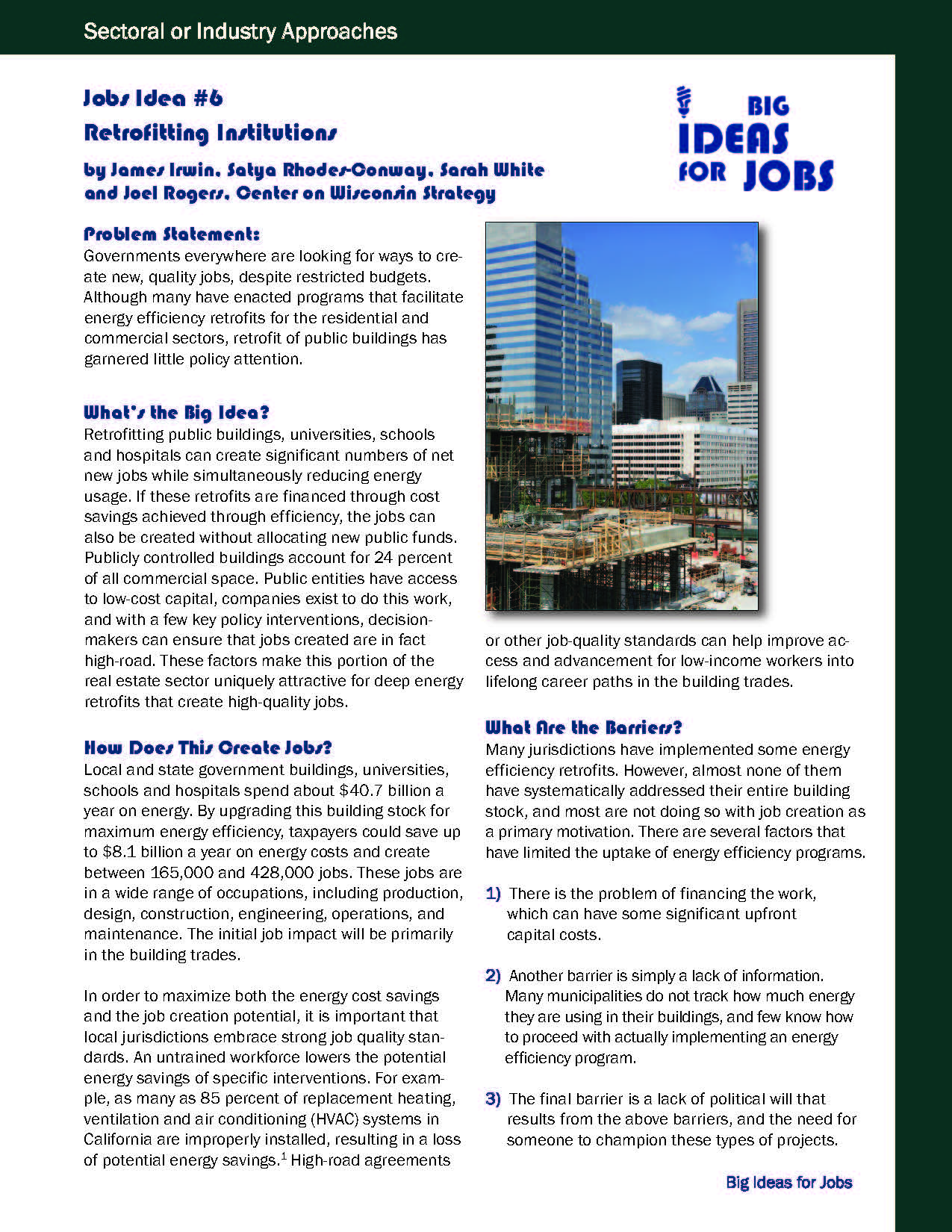
Jobs Idea #6: Retrofitting Institutions
Jobs Idea #6: Retrofitting Institutions.
Governments everywhere are looking for ways to create new, quality jobs, despite restricted budgets. Although many have enacted programs that facilitate energy efficiency retrofits for the residential and commercial sectors, retrofit of public buildings has garnered little policy attention.
Cities and Jobs: Local Strategies for Improving Job Quality and Access
Cities and Jobs: Local Strategies for Improving Job Quality and Access.
What can cities do to improve the quality of jobs? How can cities boost the access of the disadvantaged to the good jobs available in their jurisdictions? Building from policy innovations and experiences from all around the country, we offer here a menu of city policies aimed at improving job quality and redistributing job opportunities in favor of the disadvantaged.